Use mouse wheel, arrow keys or left click (with scroll tool selected) to scroll
Drag with one finger (with the scroll tool selected) to scroll
DICOM HelpSource: Local (us-east1-c)
Findings
- Mildly displaced avulsion fracture of the left occipital condyle
- Nondisplaced fracture of the left C3 uncinate process
- Minimally displaced C4, C5 and C6 spinous process fractures
- Fracture of the left C7 transverse process extending into the superior articulating facet
- Mild superior endplate irregularity of the C7 vertebral body without bony retropulsion
- Partially imaged skull base fracture extending through the lateral walls of both sphenoid sinuses and involving the left carotid canal
- Left sphenoid hemosinus
- Partially imaged endotracheal tube
Diagnosis
Displaced occipital condyle avulsion fracture
Sample Report
Mildly displaced avulsion fracture of the left occipital condyle. Nondisplaced fracture of the left C3 uncinate process. Minimally displaced C4-C6 spinous process fractures. Fracture of the left C7 transverse process extending into the superior articulating facet. Mild superior endplate irregularity of the C7 vertebral body without bony retropulsion.
No traumatic malalignment.
Partially imaged skull base fracture extending through the lateral walls of both sphenoid sinuses and involving the left carotid canal. Left sphenoid hemosinus. These findings can be further evaluated with a dedicated head CT.
Discussion
- Occipital condyle fractures are often missed, in part because they are often nondisplaced or minimally displaced. Make sure to look closely at the condyles on all three planes (you can do this at the same time you check alignment at the craniocervical junction)
- Remember that the alar ligaments attach to the occipital condyle. Displaced avulsion fractures are considered unstable injuries concerning for underlying ligament injury, and while you do not need to know the surgical classification schemes, make sure to mention whether or not these fractures are displaced
Annotated Images & Illustrations
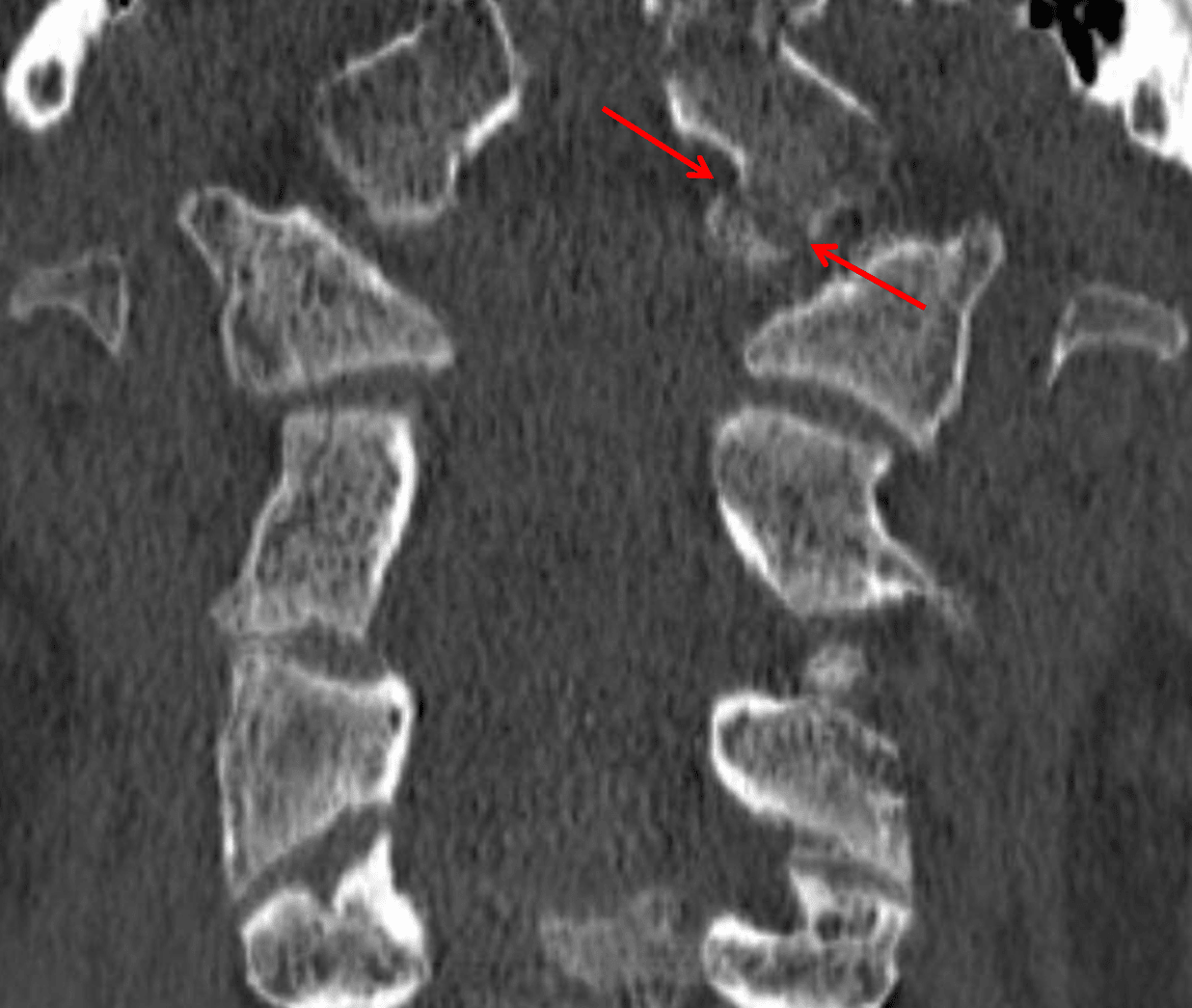
Red arrows: displaced left occipital condyle fracture.
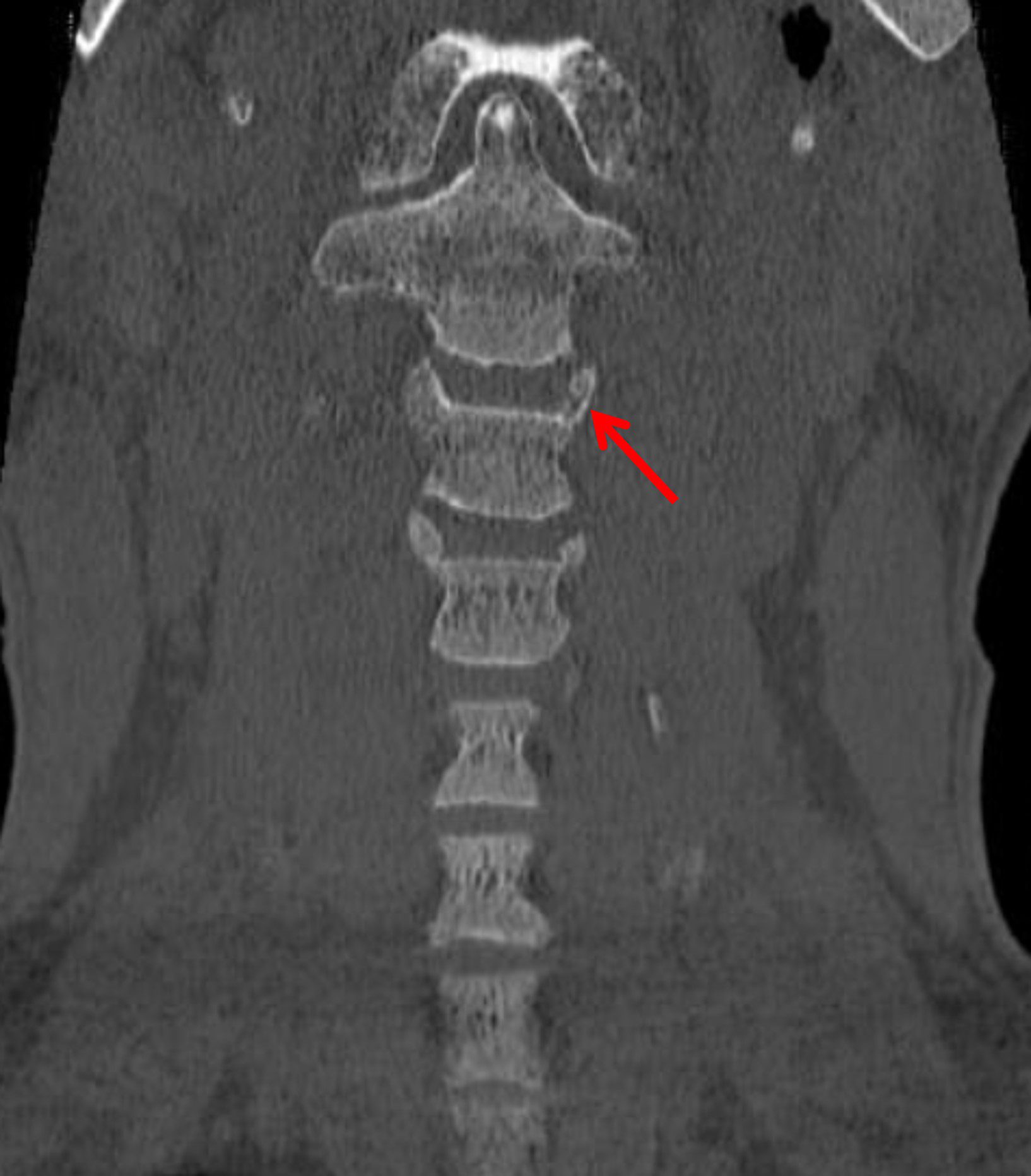
Left C3 uncinate process fracture (red arrow).
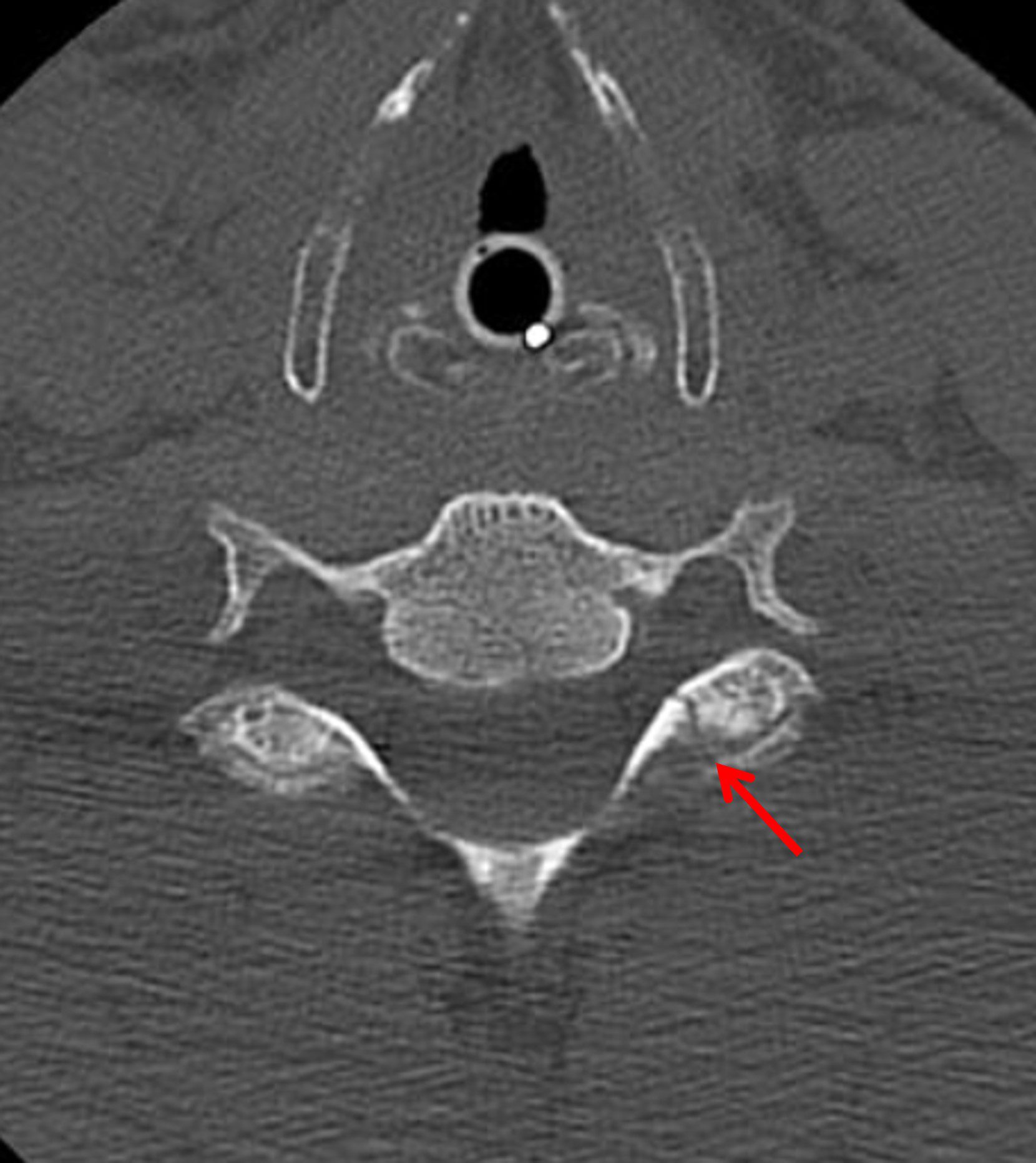
Left C7 transverse process fracture (red arrow).
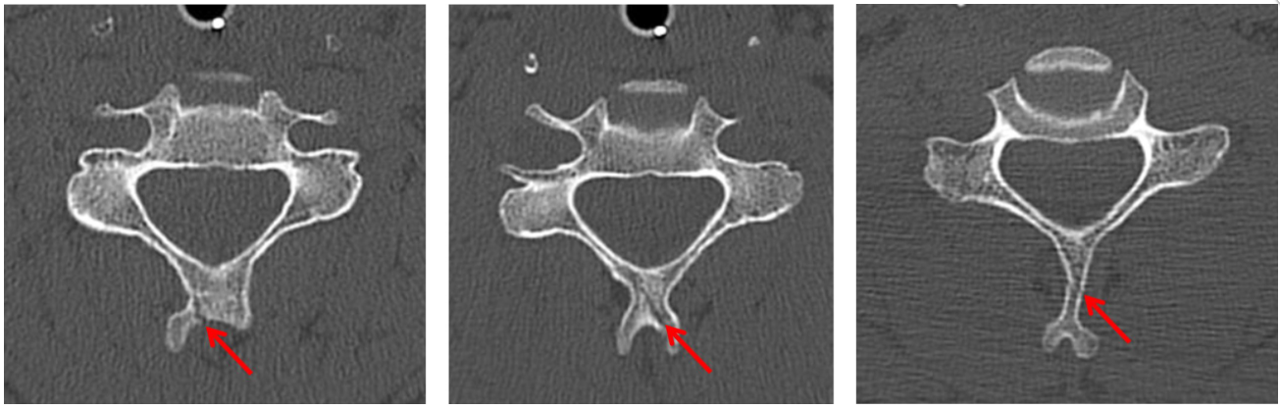
C4-C6 spinous process fractures (red arrows).
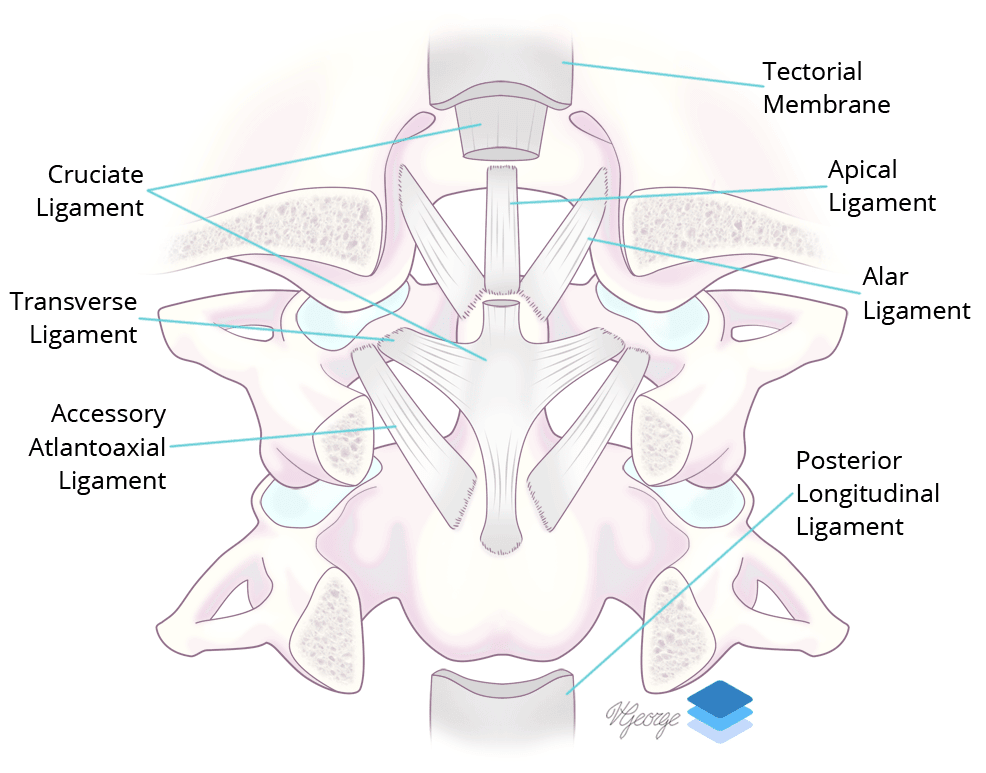
Coronal view of the major ligaments at the craniocervical junction.
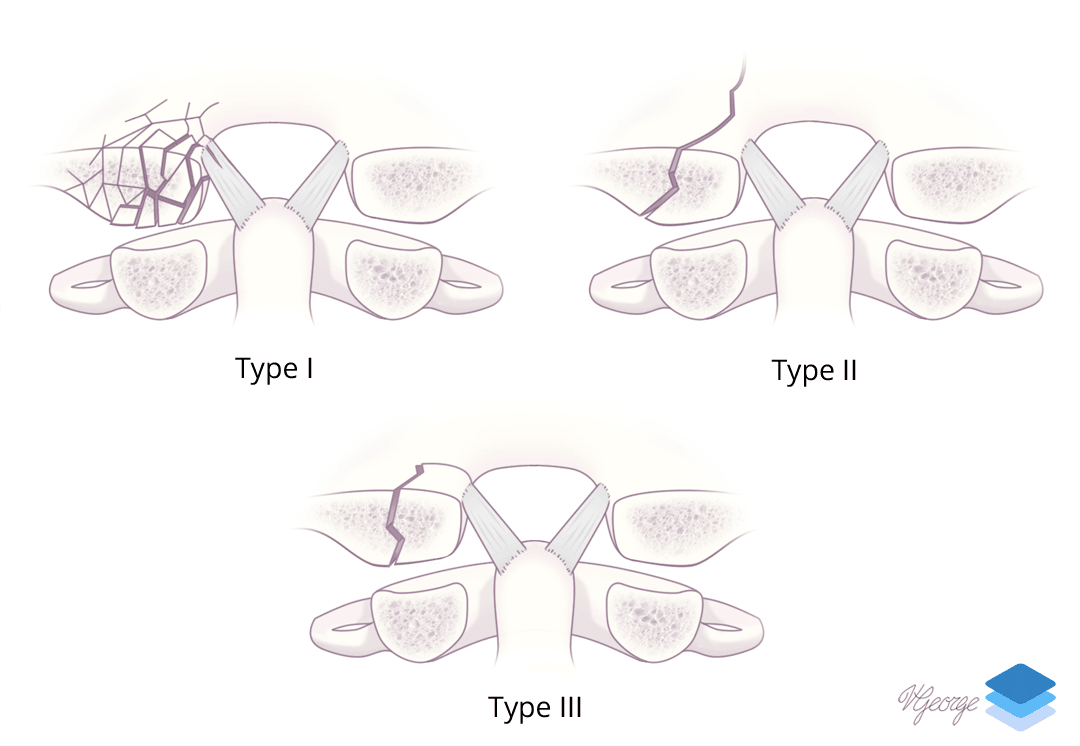
Occipital condyle fractures.
Related Video
Cervical Spine Trauma
YouTube