Demographics:
0 days old, Female
Indication:
Respiratory distress (born at 31 weeks)
Findings
- Diffuse hazy opacities throughout both lungs with low to normal lung volumes
- Endotracheal tube with tip projecting at the level of T3
Diagnosis
Respiratory distress syndrome (RDS)
Sample Report
Diffuse hazy opacities throughout both lungs with low to normal lung volumes, which can be seen with respiratory distress syndrome.
No pleural effusions.
Endotracheal tube with tip projecting at the level of T3.
No acute findings in the abdomen.
Discussion
- When evaluating chest radiographs in newborns with respiratory distress, try following the decision tree in the annotated image below
- Respiratory distress syndrome is almost exclusively seen in premature infants (especially younger than 33 weeks) and results from surfactant deficiency
- The typical radiographic appearance includes low lung volumes with diffuse hazy opacities. Pleural effusions are *not *typically seen in RDS, and should make you concerned about pneumonia
- Surfactant therapy should result in rapid clearance of pulmonary opacification, though progression of clearance can be asymmetric
Annotated Images & Illustrations
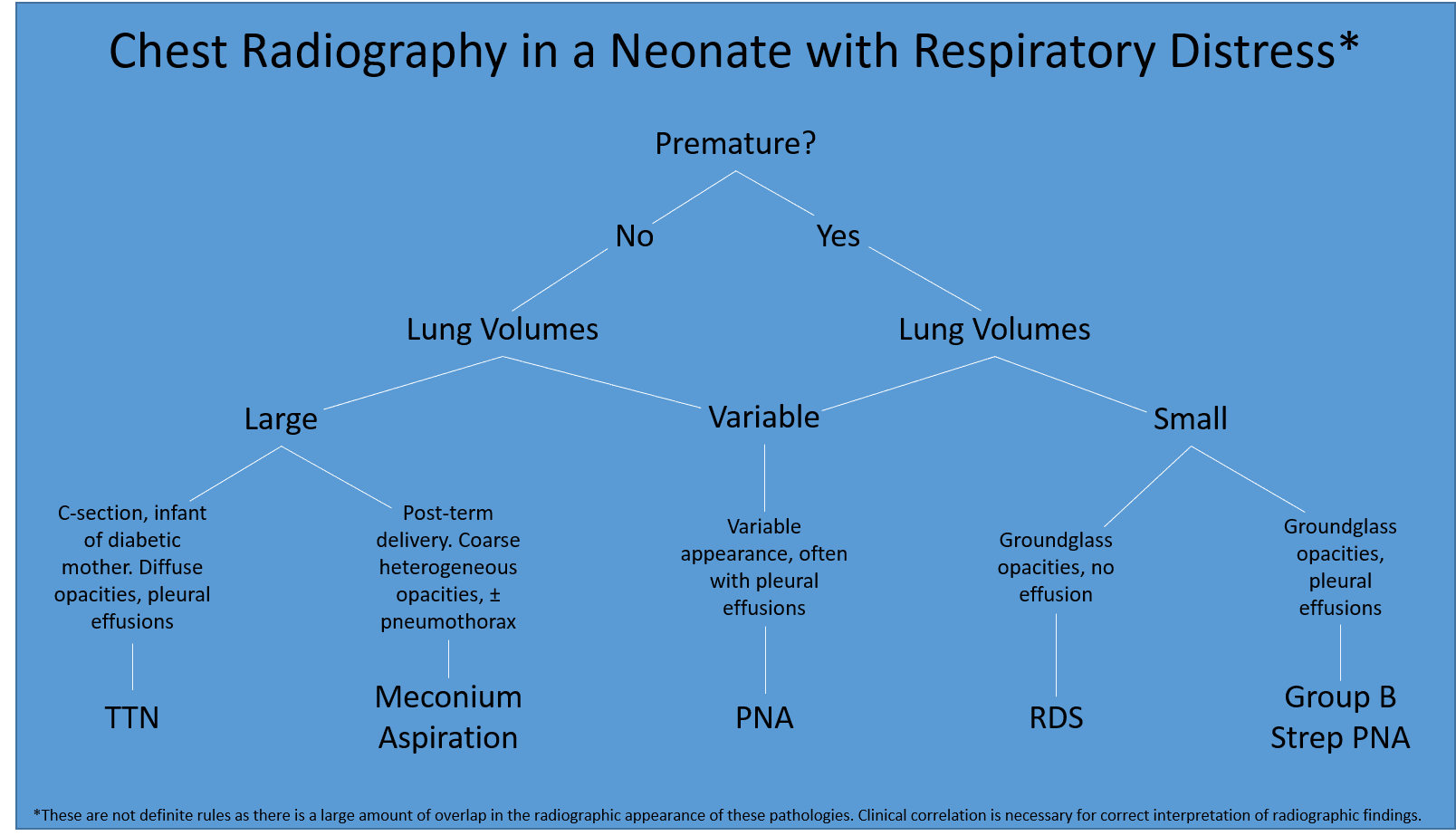
Algorithmic approach to chest radiographs in neonates with respiratory distress.